

Indoor air quality matters more than most homeowners realize. Dust, pollen, pet dander, and mold spores circulate through forced-air systems and settle on every surface. Electrostatic air purifiers promise relief without the ongoing cost of replacement filters, using charged plates to trap particles instead of HEPA media. They’re quieter than many mechanical filters, potentially cheaper over time, and don’t require frequent trips to the hardware store. But they also generate ozone as a byproduct, struggle with the smallest particles, and need regular cleaning to stay effective. Before retrofitting one into your HVAC system or buying a standalone unit, it’s worth understanding how the technology actually works and where it falls short.
Table of Contents
ToggleKey Takeaways
- Electrostatic air purifiers eliminate recurring filter costs by using rechargeable charged plates instead of disposable HEPA media, potentially saving hundreds of dollars over five years.
- These units work best on common household allergens like dust, pollen, and pet dander in the 1–10 micron range, but struggle with ultrafine particles, smoke, and viral aerosols that require true HEPA filtration.
- An electrostatic air purifier generates ozone as a byproduct, which can irritate lungs and trigger asthma—making them unsuitable for households with respiratory conditions or chronic lung issues.
- Monthly cleaning of collection plates is essential for maintaining effectiveness, as dust buildup reduces efficiency and requires pulling the cassette for rinsing every two to four weeks.
- Whole-house electrostatic air purifiers reduce strain on HVAC blowers compared to high-MERV filters, potentially lowering energy consumption and extending motor life, while portable models offer quiet operation for single rooms.
- Electrostatic technology underperforms HEDR filters in standardized clean air delivery rate (CADR) testing, especially for smoke and fine particulate, so verify independent lab results before purchasing.
What Is an Electrostatic Air Purifier?
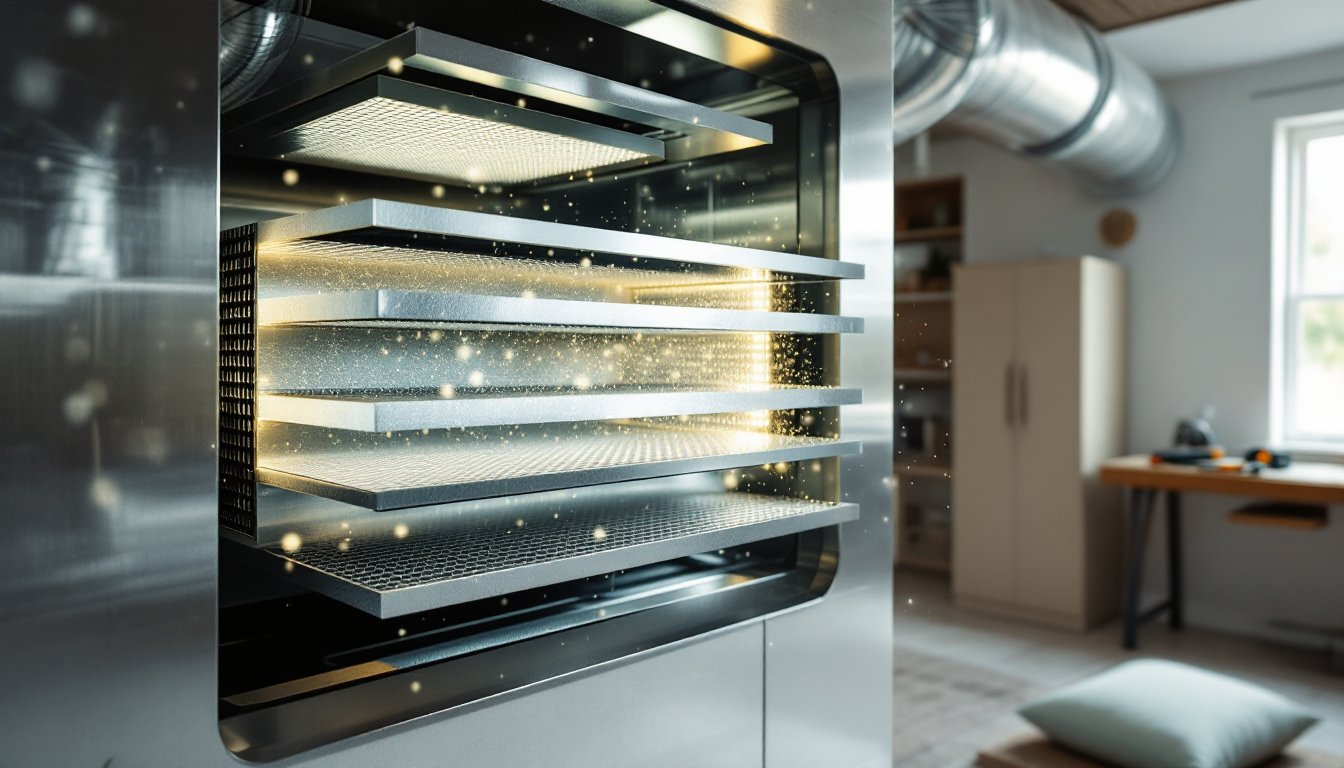
An electrostatic air purifier uses an electrical charge to capture airborne particles instead of relying on dense filter media. The core component is a set of metal plates or wires that generate a high-voltage electrostatic field. When air passes through, particles pick up a charge and either stick to oppositely charged collection plates or to each other, forming larger clumps that settle out of the airstream.
These units come in two main configurations: whole-house models that integrate into your existing HVAC ductwork (typically installed near the return plenum) and portable room units that sit on a floor or shelf. Whole-house versions are usually wired into the furnace or air handler’s power supply and handle the full airflow of your heating and cooling system. Portable models plug into a standard 120V outlet and treat air in a single room, with coverage ranging from 200 to 800 square feet depending on the unit.
Unlike HEPA filters that physically trap particles in woven fibers, electrostatic purifiers rely on charged plates you can wash and reuse indefinitely. There’s no disposable filter cartridge to track down at the hardware store every three months, which appeals to homeowners tired of ongoing replacement costs.
How Electrostatic Air Purifiers Work
The process starts with an ionizer stage, where a high-voltage wire or needle-point electrode releases electrons into the airstream. These electrons attach to passing dust, pollen, smoke, and other particles, giving them a negative charge. Some designs use corona discharge, which generates a visible glow and a faint ozone smell, more on that in a minute.
Once charged, particles drift toward positively charged collection plates made of aluminum or steel. The electrostatic attraction pulls them out of the air and holds them on the plate surface until you clean it off. In whole-house units, the collection cell is usually a removable cassette you slide out for washing. Portable models may have a single flat plate or a series of parallel grids.
Airflow is driven by the existing HVAC blower in ducted systems or by an internal fan in standalone units. The air doesn’t pass through a dense filter matrix, so static pressure drop is minimal, your furnace fan doesn’t have to work as hard compared to a high-MERV pleated filter. That can mean slightly lower energy consumption, though the ionizer itself draws a small amount of power (typically 20–50 watts for whole-house models).
One important caveat: electrostatic purifiers are most effective on particles larger than 0.3 microns. Ultrafine particles, think combustion byproducts, viruses, and volatile organic compounds, often slip through because they don’t hold a charge as reliably. If your primary concern is smoke, chemical fumes, or viral transmission, a true HEPA filter (which captures 99.97% of particles at 0.3 microns) or an activated carbon stage will outperform electrostatic technology.
Benefits of Electrostatic Air Purifiers for Homeowners
No recurring filter costs. You buy the unit once and wash the collection plates every month or two. Over five years, that can save several hundred dollars compared to replacing HEPA or pleated filters quarterly. For a whole-house setup, the savings stack up faster since furnace filters in higher MERV ratings run $30–$60 each.
Lower resistance to airflow. Because there’s no dense media to push air through, your HVAC blower doesn’t strain as much. That can extend blower motor life and shave a few dollars off monthly utility bills, especially if you were running a MERV 13 or higher pleated filter before. The difference isn’t dramatic, but it’s measurable in systems with undersized ductwork or marginal blower capacity.
Quiet operation. Electrostatic units produce minimal noise beyond the hum of the blower. Portable models are often quieter than fan-driven HEPA purifiers because the internal fan doesn’t have to overcome high static pressure. If you’re sensitive to white noise or running the unit in a bedroom, that’s a real advantage.
Effective on common household allergens. Dust, pollen, pet dander, and mold spores are all in the 1–10 micron range, right in the electrostatic purifier’s sweet spot. Homeowners with mild to moderate allergies often notice less dust accumulation on furniture and fewer sneezing fits after installing a whole-house unit. It won’t eliminate allergens, but it can reduce airborne concentrations enough to make a difference.
Many smart home product reviews highlight integration features on newer models, including Wi-Fi connectivity, filter-clean reminders, and compatibility with voice assistants. If you’re already running a connected HVAC system or air quality monitor, an electrostatic purifier with app control can slot into your ecosystem without extra hassle.
Drawbacks and Limitations to Consider
Ozone generation. The same corona discharge that ionizes particles also produces ozone (O₃) as a byproduct. At low concentrations, ozone is a lung irritant: at higher levels, it can trigger asthma attacks and aggravate respiratory conditions. The EPA recommends indoor ozone levels below 0.05 ppm, and most modern electrostatic purifiers are designed to stay well under that threshold, but older units or poorly maintained ones can creep higher. If anyone in your household has asthma, COPD, or chronic lung issues, an ozone-free technology (HEPA, activated carbon) is a safer bet.
Limited effectiveness on ultrafine particles and VOCs. Smoke, cooking fumes, off-gassing from new carpet or paint, and viral aerosols are mostly sub-micron particles that don’t reliably hold a charge. Electrostatic purifiers will catch some, but a HEPA filter or an activated carbon stage will do a much better job. If your goal is to clear smoke from wildfires or cooking, you’ll be disappointed.
Collection plates need regular cleaning. The plates work until they’re coated with a thick layer of captured particles, at which point efficiency drops off sharply. In a dusty home or during high-pollen seasons, you may need to pull and wash the plates every two to four weeks. It’s not difficult, most units let you rinse the cassette in a utility sink or spray it down with a garden hose, but it’s not zero-maintenance either.
Upfront cost and installation complexity. Whole-house electrostatic purifiers run $600–$1,200 for the unit alone, plus installation if you’re not comfortable working with ductwork and low-voltage wiring. You’ll need to cut a section of return duct, mount the unit, and wire it to the furnace’s blower circuit. That’s a half-day project for a confident DIYer with tin snips and a drill, but many homeowners call in an HVAC tech. Portable units are cheaper ($150–$400) but still cost more upfront than a basic HEPA purifier.
Some independent smart home device reviews note that electrostatic models lag behind mechanical filters in standardized clean air delivery rate (CADR) testing, especially for smoke and fine particulate. If you’re comparing specs, pay attention to the CADR numbers for smoke, dust, and pollen, not just the manufacturer’s coverage-area claim.
Maintenance Requirements and DIY Care Tips
Monthly cleaning is non-negotiable. Pull the collection cell and rinse it under warm water. For stubborn buildup, use a mild detergent or a 50/50 vinegar-and-water solution. Avoid abrasive scrubbers or steel wool, they can damage the coating on the plates and reduce charging efficiency. Let the cell air-dry completely before reinstalling: water on the plates can cause arcing or short circuits when you power the unit back on.
Check the ionizer wires. Over time, dust and carbon deposits can coat the corona wires, reducing ionization. Most units let you access the ionizer stage by removing a cover panel. Wipe the wires gently with a dry cloth or a soft brush. If you see heavy black deposits, it’s a sign you’re overdue for cleaning or the unit is generating excessive ozone.
Inspect the pre-filter. Many electrostatic purifiers include a washable foam or mesh pre-filter to catch large debris before it reaches the ionizer. Check it monthly and rinse as needed. A clogged pre-filter starves the unit of airflow and forces the blower to work harder.
Power off before servicing. Electrostatic units operate at several thousand volts. Always turn off the power at the breaker or unplug the unit before pulling the collection cell or touching any internal components. Even after shutdown, the plates can hold a residual charge for a few minutes, tap them with an insulated screwdriver to discharge before handling.
Monitor ozone smell. A faint, clean smell is normal during operation, but a strong, bleach-like odor means the unit is producing too much ozone. That’s usually a sign of dirty ionizer wires, a damaged power supply, or a unit that’s simply past its service life. If cleaning doesn’t solve it, replace the unit.
For whole-house systems, mark your calendar or set a phone reminder. It’s easy to forget until you notice dust accumulating faster than usual or the furnace blower cycling more often. Consistent maintenance keeps efficiency high and prevents strain on your HVAC components.
Are Electrostatic Air Purifiers Right for Your Home?
Electrostatic purifiers make the most sense in a few specific scenarios:
You have a forced-air HVAC system and want whole-house filtration without the drag of a high-MERV pleated filter. If your blower struggles with airflow or your ducts are on the small side, an electrostatic unit can improve air quality without choking the system.
Your main concern is common allergens, dust, pollen, pet dander, and you don’t have severe respiratory issues. If someone in the household has asthma or chronic lung problems, stick with a true HEPA filter and skip the ozone risk.
You’re willing to commit to monthly cleaning. If the idea of pulling a cassette and hosing it down every few weeks sounds tedious, you’ll be happier with a disposable filter you swap out quarterly.
You want to reduce long-term filter costs. Over five or ten years, the savings on replacement filters can offset the higher upfront price, especially for whole-house setups. Run the numbers for your specific situation before buying.
Electrostatic purifiers are not ideal if you’re dealing with smoke, VOCs, or ultrafine particulate from cooking or wildfire events. They also won’t help with odors unless paired with an activated carbon stage. For those use cases, a dedicated HEPA purifier or a multi-stage unit with carbon filtration will outperform electrostatic technology by a wide margin.
If you’re comparing options, check recent reviews and comparisons of top air purifiers to see how electrostatic models stack up against HEPA and hybrid designs in real-world testing. CADR ratings, noise levels, and energy consumption vary widely across brands, and independent lab testing can reveal performance gaps the manufacturer’s marketing won’t.
Conclusion
Electrostatic air purifiers offer a low-maintenance, low-resistance alternative to disposable filters for homeowners focused on common allergens and long-term savings. They’re not a universal solution, ozone concerns, limited effectiveness on ultrafine particles, and the need for regular cleaning all matter. But in the right application, paired with a forced-air system and a commitment to monthly maintenance, they can deliver cleaner air without the recurring cost or airflow penalty of high-efficiency pleated filters. Measure your goals, check your HVAC setup, and decide whether washable plates or disposable media makes more sense for your home.