
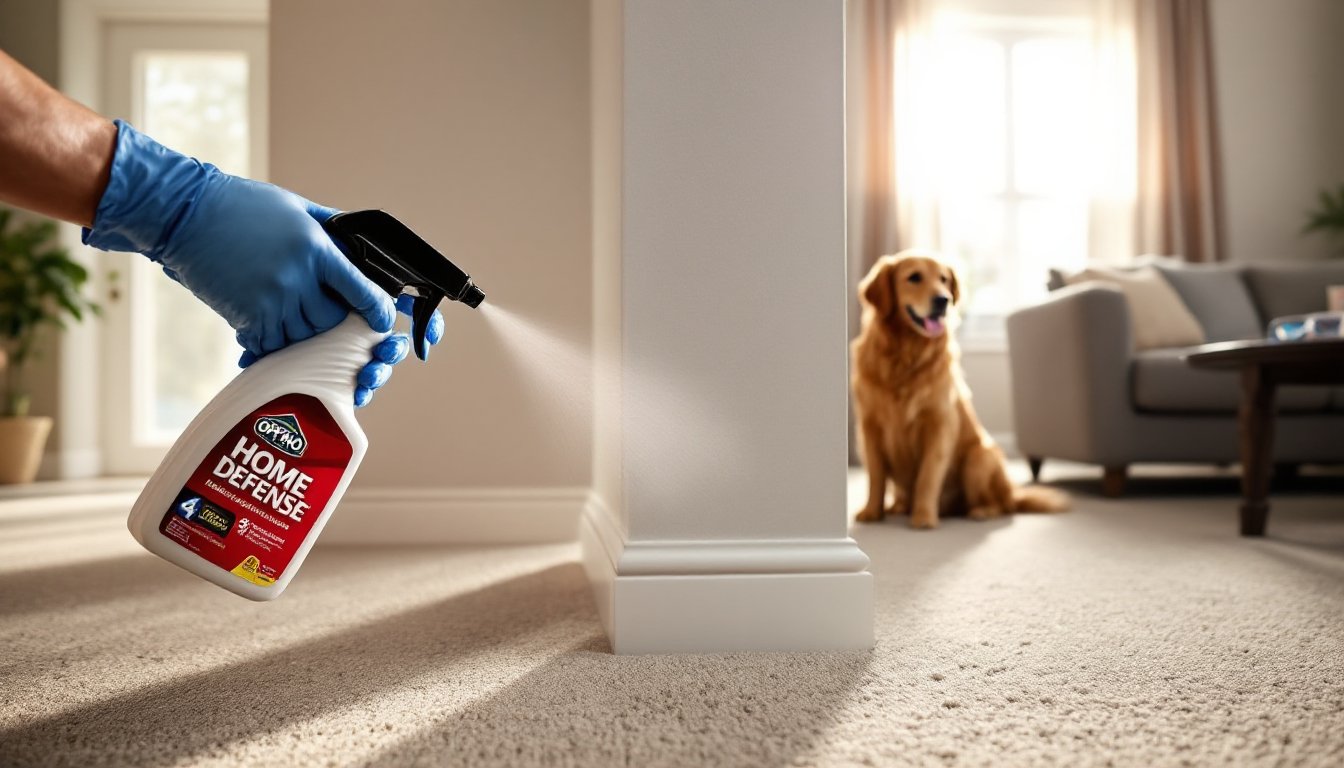

Finding bugs crawling across your kitchen floor or ants marching along the baseboards isn’t just unpleasant, it’s a call to action. Ortho Home Defense has been a go-to solution for homeowners dealing with indoor pest problems for years, but safety concerns always come up when you’re spraying anything inside the house. With pets underfoot, kids around, and your own health to consider, it’s fair to ask whether this product is truly safe for indoor use. This article breaks down what Ortho Home Defense contains, how it works, and exactly what precautions homeowners should take to use it safely and effectively indoors.
Table of Contents
ToggleKey Takeaways
- Ortho Home Defense is EPA-registered and considered safe for indoor use when applied according to label instructions, but proper technique and drying time are critical for minimizing household risk.
- The active ingredient bifenthrin works by disrupting insect nervous systems at low concentrations, though cats and other pets are more sensitive and may require longer drying periods before re-entry.
- Safe indoor application requires removing pets and children before spraying, using targeted 4-inch bands along baseboards rather than broad surface coverage, and allowing at least 2 hours of drying time with good ventilation.
- Households with infants, crawling children, sensitive pets, or family members with asthma or chemical sensitivities should consider non-chemical pest control alternatives or consult professionals before using Ortho Home Defense indoors.
- Over-application increases exposure risk without improving effectiveness, and spraying near food preparation areas, drains, or aquatic pet habitats must be strictly avoided to prevent health and environmental harm.
What Is Ortho Home Defense and How Does It Work?
Ortho Home Defense Insect Killer is a perimeter-based insecticide designed to kill and prevent a wide range of common household pests including ants, roaches, spiders, fleas, ticks, and centipedes. It comes in a ready-to-use spray bottle with a continuous spray wand, making application straightforward for homeowners without mixing or special equipment.
The product works through contact killing and residual protection. When sprayed, it creates a barrier that insects contact as they move through treated areas. The active ingredients disrupt the nervous system of insects, leading to paralysis and death. Once dry, the barrier continues to work for weeks, Ortho claims up to 12 months of protection indoors when applied to baseboards, entry points, and other areas where pests travel.
Most formulations use synthetic pyrethroids, a class of insecticides modeled after natural compounds found in chrysanthemum flowers. These compounds are effective at low concentrations against insects but break down relatively quickly when exposed to sunlight and air. For indoor applications, the product is designed to be applied as a thin barrier spray along baseboards, around windows and doors, behind appliances, and in cracks and crevices, not as a blanket spray across open floors or furniture.
Safety Profile: Is Ortho Home Defense Safe When Used Indoors?
When used according to label instructions, Ortho Home Defense is considered safe for indoor application by the EPA. The product has been registered and evaluated for residential use, which means it has passed toxicity testing and risk assessments for typical household exposure scenarios. That said, “safe when used as directed” is the key phrase, misuse, over-application, or ignoring label precautions can create unnecessary risks.
The safety profile depends heavily on proper application and drying time. Once the spray has dried completely (typically 30 minutes to 2 hours depending on ventilation and humidity), the treated surfaces pose minimal risk to humans and pets under normal contact. The product is designed for targeted application, not broad surface spraying, which limits exposure.
But, it’s not without risks during and immediately after application. The liquid spray can cause skin irritation, and inhaling mist or vapors may irritate the respiratory system. This is why the label specifies keeping people and pets out of treated areas until surfaces are dry. For households with specific pest control needs, understanding these safety windows is critical.
Active Ingredients and Their Effects on Humans and Pets
Most Ortho Home Defense formulations contain bifenthrin as the primary active ingredient, typically at a concentration around 0.05%. Bifenthrin is a synthetic pyrethroid that targets the nervous systems of insects. In humans and pets, exposure to small amounts (like dried residue on baseboards) is generally considered low-risk because mammals metabolize and excrete pyrethroids more efficiently than insects.
That said, bifenthrin is not without concerns. High or repeated exposure can cause symptoms including skin tingling, dizziness, nausea, or headaches in humans. Pets, especially cats, are more sensitive to pyrethroids than humans. Cats lack certain liver enzymes that break down these compounds, making them more vulnerable to toxicity if they walk on wet-treated surfaces and then groom themselves.
Some formulations also include zeta-cypermethrin, another pyrethroid with similar properties and safety considerations. Both ingredients are classified as likely low in toxicity to humans when used as directed, but the EPA does note potential risks to aquatic organisms, so these products should never be applied near drains, water sources, or allowed to run off into storm sewers.
It’s worth noting that “low toxicity” doesn’t mean “no toxicity.” Sensitive individuals, those with asthma, chemical sensitivities, or compromised immune systems, may experience reactions even with proper use. Pregnant women and households with infants should exercise extra caution and consider non-chemical pest control methods when possible.
Best Practices for Safe Indoor Application
Applying Ortho Home Defense safely indoors isn’t complicated, but it does require following a clear set of steps. Skipping prep work or rushing the process increases both safety risks and the chance the treatment won’t work effectively.
Preparation Steps Before Spraying Indoors
Before you crack open the bottle, take time to prepare the space properly. Remove pets, children, and other household members from the area you’ll be treating. If you have fish tanks or bird cages, cover them with plastic sheeting or relocate them to untreated rooms, aquatic animals and birds are particularly sensitive to airborne insecticide particles.
Clear the treatment area of toys, pet bowls, food items, and any objects that might be handled frequently. You’re not spraying countertops or dining tables, but drift and overspray can happen, so it’s better to move items out of the way. Vacuum baseboards and corners to remove dust, cobwebs, and debris. Insecticides work best when they contact clean surfaces, and built-up grime can prevent proper adhesion.
Put on appropriate personal protective equipment (PPE). At minimum, wear nitrile or rubber gloves and safety glasses to protect against splashes. If you’re treating a large area or have respiratory sensitivities, a disposable N95 mask is a smart addition. Long sleeves and pants prevent accidental skin contact.
Open windows and turn on fans to improve ventilation during and after application. Good airflow helps the product dry faster and reduces the concentration of any airborne particles. For comprehensive home maintenance routines, including pest prevention alongside regular upkeep tasks can reduce the need for frequent chemical treatments.
Application Tips for Maximum Safety and Effectiveness
When you’re ready to spray, hold the bottle upright and use the wand applicator to apply a continuous 4-inch band along baseboards, behind appliances, around door frames, window sills, and any cracks or crevices where pests might enter or travel. Don’t soak surfaces, a light, even coating is all you need. Over-application doesn’t improve effectiveness and increases exposure risk.
Avoid spraying in food preparation areas, on countertops, or anywhere food is stored or consumed. The label specifically prohibits application to surfaces where food is prepared. If treating under sinks or around plumbing, be mindful of drips and avoid spraying directly onto pipes or into drains.
Work systematically around the room so you don’t miss spots or double-spray areas. After treating one room, close the door if possible and move to the next area. This containment approach minimizes the spread of any airborne particles to untreated spaces.
Once application is complete, wash your hands and any exposed skin thoroughly with soap and water. Store the product in its original container in a cool, dry place out of reach of children and pets, preferably in a locked cabinet or high shelf. Never transfer it to unmarked containers.
Allow treated surfaces to dry completely before allowing people or pets back into the area. Drying time varies, but plan for at least 2 hours with good ventilation. Touch a discrete spot with a gloved finger to confirm it’s dry before reopening the room. Once dry, there’s no need to rinse or wipe down treated baseboards unless someone will be in direct, prolonged contact with those surfaces (like a crawling infant).
Potential Risks and Precautions for Children and Pets
Children and pets face higher exposure risks than adults for a few reasons: they’re closer to the ground where treatments are applied, they’re more likely to touch treated surfaces, and they have higher respiratory rates relative to body weight. Infants and toddlers who crawl or play on floors are especially vulnerable, as are curious pets who investigate baseboards and corners.
For households with young children, consider treating only high-traffic pest entry points rather than every baseboard in the house. Focus on areas like garage doors, basement entries, and under sinks where pests are most likely to come in, and leave play areas and bedrooms untreated if possible. If you must treat a child’s room, remove all toys, bedding, and washable items before spraying, and don’t allow re-entry until surfaces are fully dry and the room has been well-ventilated for several hours.
Pets require special consideration, particularly cats. Keep pets completely out of treated rooms until surfaces are dry. For cats, err on the side of extra caution, wait at least 4 hours and ensure thorough ventilation before allowing them back. Dogs are generally less sensitive, but puppies and small breeds should be treated with the same care as cats. Never spray pet bedding, toys, or feeding areas. If your pet shows signs of distress after exposure, excessive drooling, tremors, difficulty walking, or vomiting, contact your veterinarian immediately and bring the product label with you.
Birds, fish, and reptiles are far more sensitive to airborne chemicals than cats and dogs. Remove these pets from the house entirely during application, or at minimum, move them to a separate, sealed room with independent ventilation. Cover aquariums with plastic wrap and turn off air pumps temporarily to prevent water contamination.
For homes interested in broader home care strategies that balance pest control with family safety, rotating between chemical and non-chemical methods, like sealing entry points, maintaining cleanliness, and using traps, can reduce reliance on any single product and lower cumulative exposure risks.
If anyone in the household has asthma, allergies, or chemical sensitivities, consult a physician before using any insecticide indoors. In some cases, professional pest control services using integrated pest management (IPM) techniques may be a safer, more effective option than DIY chemical treatments.