
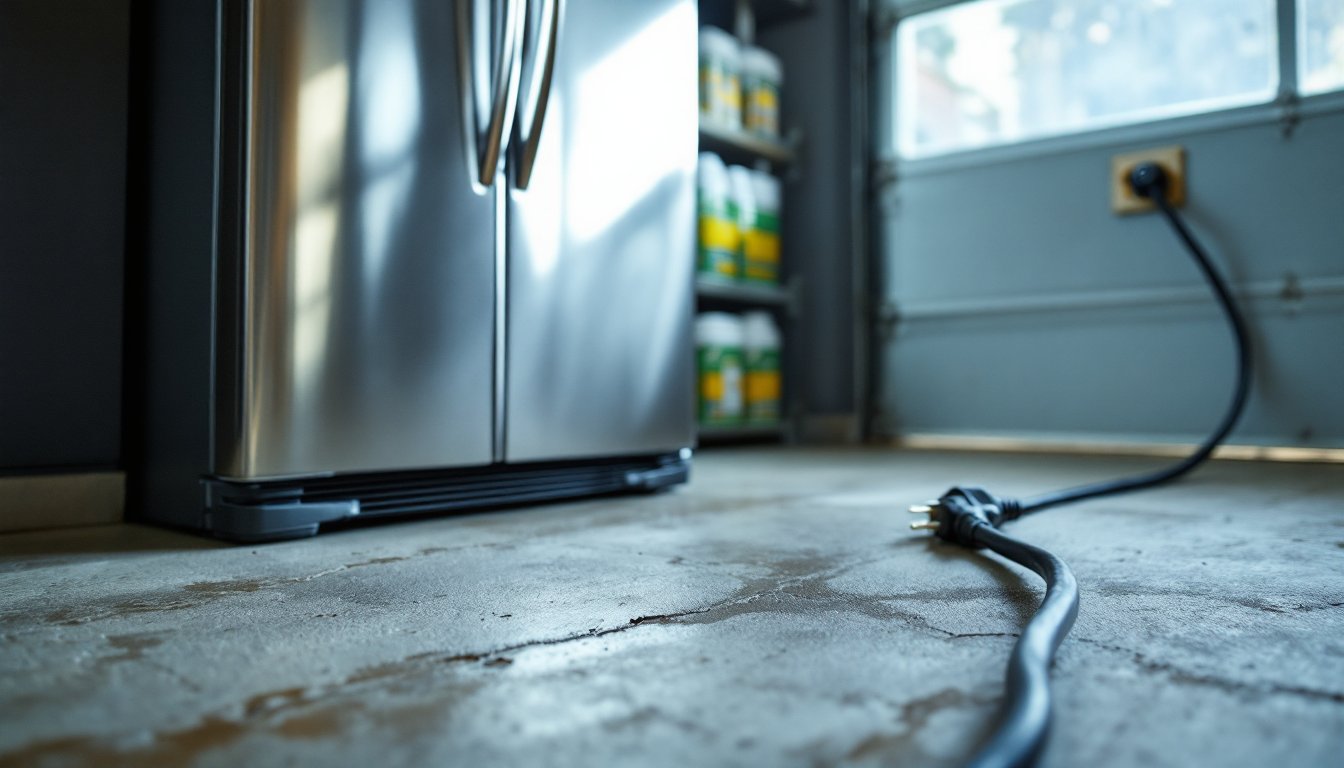

Plugging a refrigerator into an extension cord might seem like an easy fix when the outlet is just a few feet too far. But this common workaround carries real risks, from tripped breakers and voltage drops to fire hazards and voided warranties. Most refrigerators draw significant power during compressor startup, and standard household extension cords aren’t built to handle that sustained load safely. Whether you’re setting up a garage fridge, rearranging your kitchen, or dealing with a basement unit, understanding which cords work (and which don’t) can prevent damage to your appliance and your home. This guide walks through the electrical requirements, safety certifications, and best practices for using an extension cord with a refrigerator when permanent wiring isn’t an option.
Table of Contents
ToggleKey Takeaways
- Most manufacturers discourage using an extension cord for a refrigerator because standard cords can’t safely handle the 6–8 amps continuous draw and 15–20 amp startup surges required by these appliances.
- A proper extension cord for your refrigerator must be at least 12 AWG for runs up to 50 feet, three-prong grounded, UL/ETL certified, and matched to your fridge’s actual distance from the outlet to prevent voltage drop and overheating.
- An extension cord for a refrigerator should be plugged into a dedicated wall outlet on a 15- or 20-amp circuit, never daisy-chained, coiled, or shared with other appliances to avoid cumulative load failures and fire hazards.
- If the extension cord feels noticeably warm after 24 hours of use, it indicates inadequate gauge or circuit overload—unplug immediately and upgrade to a heavier-duty cord or install a permanent outlet.
- For permanent refrigerator placements, investing $150–$400 in a dedicated 20-amp circuit is safer and more cost-effective long-term than relying on an extension cord, which risks warranty voidance and appliance damage.
Can You Safely Use an Extension Cord with a Refrigerator?
The short answer: it’s discouraged, but if unavoidable, it must be done correctly. Most appliance manufacturers explicitly warn against using extension cords with refrigerators in their user manuals. The National Electrical Code (NEC) doesn’t outright ban the practice, but it requires any cord used to meet strict amperage and grounding standards.
Refrigerators are considered stationary appliances. They’re designed to plug directly into a dedicated 15- or 20-amp circuit. When an extension cord is introduced, it adds resistance, increases the risk of overheating, and can cause voltage drop, especially problematic during compressor startup when current draw spikes.
That said, situations exist where a cord is the only practical short-term solution: a garage fridge too far from an outlet, a rental where you can’t modify wiring, or a temporary setup during a kitchen remodel. In these cases, safety hinges on choosing the right cord and using it properly.
Why Most Extension Cords Aren’t Safe for Refrigerators
Standard indoor extension cords sold at big-box stores are rated for lamps, fans, and small electronics, not continuous-duty appliances. Here’s why they fail:
Insufficient wire gauge. Lightweight cords (16 AWG or 18 AWG) can’t handle the sustained 5–8 amps a refrigerator draws, let alone the 15–20 amp surge during compressor cycling. Over time, the wire heats up, degrades insulation, and becomes a fire risk.
Inadequate grounding. Two-prong cords lack the grounding pin that protects against electrical faults. Refrigerators have metal exteriors: without proper grounding, a short circuit can energize the entire appliance.
Voltage drop over distance. The longer the cord, the more resistance it introduces. A 25-foot, 16-gauge cord can drop voltage by 5–10%, causing the compressor to work harder, run hotter, and fail prematurely. You’ll notice warmer food, longer run cycles, and higher energy bills before the compressor burns out.
Many homeowners have used cheap extension cords without incident, until they haven’t. The damage is cumulative and often invisible until it’s catastrophic. According to appliance safety testing, underpowered cords are a leading cause of household electrical fires involving large appliances.
Choosing the Right Extension Cord for Your Refrigerator
If you must use an extension cord, treat it like a permanent part of your home’s electrical system. Skimping on quality or specs is a false economy.
Gauge, Length, and Amperage Requirements
Wire gauge determines how much current a cord can safely carry. The lower the number, the thicker the wire and the higher the capacity. For refrigerators, 14 AWG is the minimum acceptable gauge, and 12 AWG is preferred.
Here’s how gauge and length interact:
- Up to 50 feet: Use 12 AWG
- 50–100 feet: Use 10 AWG (uncommon for indoor use, but necessary for long runs)
- Never use 16 AWG or 18 AWG, regardless of length
Check your refrigerator’s nameplate (usually inside the door or on the back panel) for its amperage rating. Most household fridges draw 6–8 amps during normal operation, spiking to 15 amps on startup. Your cord must be rated for at least 15 amps, even if steady-state draw is lower.
Voltage rating should be 125V minimum for standard 120V household circuits. Heavy-duty appliance cords are typically rated for 125V/15A or 125V/20A.
Length matters more than most people realize. Every additional foot adds resistance. If your fridge is 10 feet from the outlet, buy a 10-foot cord, not a 25-footer coiled behind the appliance. Excess cord creates heat pockets and tripping hazards.
Safety Features and Certifications to Look For
Not all 14-gauge cords are created equal. Look for these features:
Three-prong grounded plug (NEMA 5-15P). The round grounding pin is non-negotiable. It connects the appliance’s metal frame to your home’s grounding system, preventing shock hazards.
Heavy-duty jacket. SJTW or SJOOW-rated cords have durable insulation resistant to moisture, abrasion, and temperature extremes. The “W” suffix indicates weather resistance, useful for garage or basement installations where humidity is higher.
UL or ETL certification. These marks from Underwriters Laboratories or Intertek confirm the cord has been tested to meet ANSI/UL 817 standards for cord sets. Never buy an uncertified cord, especially from overseas sellers on budget marketplaces.
Lighted or indicator ends. Some appliance cords include a small LED to confirm power flow. It’s a minor feature, but helpful for troubleshooting in dim spaces like basements.
Flat or low-profile plug. If the fridge sits tight against a wall, a standard plug may not fit. Right-angle or flat plugs (like those from Tripp Lite or Westinghouse) reduce the clearance needed and prevent cord kinking.
Avoid multi-outlet or “octopus” cords. A refrigerator should never share a cord with other devices. The cumulative load can exceed safe limits, and the extra connection points introduce failure modes.
Best Practices for Using an Extension Cord with Your Fridge
Choosing the right cord is half the job. Installation and ongoing monitoring are just as critical.
Inspect before use. Check for cracked insulation, exposed wire, bent prongs, or burn marks. If the cord has been stored in a garage or shed, verify rodents haven’t chewed through the jacket. A damaged cord is a fire waiting to happen.
Plug directly into a wall outlet. Never daisy-chain extension cords or plug your fridge cord into a power strip. Each additional connection adds resistance and a potential failure point. The outlet should be on a dedicated 15- or 20-amp circuit, not shared with microwaves, dishwashers, or other high-draw appliances.
Run the cord along walls, not across floors. Tape it down with heavy-duty cable staples or cord covers to prevent tripping hazards and accidental unplugging. Avoid running cords under rugs, behind baseboards, or through walls, these create heat buildup and violate most building codes.
Keep the cord visible and accessible. You should be able to unplug the fridge quickly in an emergency. Don’t bury the cord behind shelving or pin it under the appliance’s weight.
Monitor the cord temperature. Once the fridge is running, check the cord after 24 hours. It should feel barely warm to the touch, roughly room temperature. If it’s noticeably hot, the gauge is too light or the circuit is overloaded. Unplug immediately and reassess.
Don’t coil excess length. Coiled wire generates inductive heating under load. If you bought a 15-foot cord but only need 10 feet, return it and buy the right length. If that’s not an option, run the excess in a loose S-curve, never a tight coil.
Consider a surge protector rated for appliances. Not all surge protectors are appropriate, but some models (like those from Tripp Lite or APC) are designed for refrigerators and include 14-gauge cords with joule ratings above 1,000. They won’t replace a proper outlet, but they add a layer of protection against voltage spikes.
Seasonal maintenance checks are essential for garage or basement fridges exposed to temperature swings. Inspect the cord quarterly for cracking, discoloration, or corrosion at the plug. Homeowners using extension cords in unfinished spaces often encounter moisture-related failures missed during routine use, as noted in seasonal maintenance guides.
Know when to call an electrician. If your fridge is in a permanent location and you’re using an extension cord long-term, it’s time to install a dedicated outlet. Wiring a new 20-amp circuit typically costs $150–$400 depending on distance and access, but it’s a one-time expense that eliminates ongoing risk. Any setup requiring a cord longer than 25 feet, or a fridge in a commercial or rental setting, should be handled by a licensed electrician. Local codes vary, and some jurisdictions require permits for new circuits or appliance installations.
Warranty implications. Many manufacturers void warranties if damage results from improper power supply. Document your setup (cord specs, circuit details, and photos) in case you ever need to file a claim. If you’re in a rental, get written approval from your landlord before using an extension cord with a major appliance.
Conclusion
An extension cord for a refrigerator is a compromise, not a solution. When done right, with the correct gauge, length, certifications, and installation, it can work safely in the short term. But it’s never as safe or efficient as a dedicated outlet. If your setup is temporary, stay vigilant. If it’s permanent, budget for proper wiring. Your fridge, your home, and your peace of mind are worth the investment.