
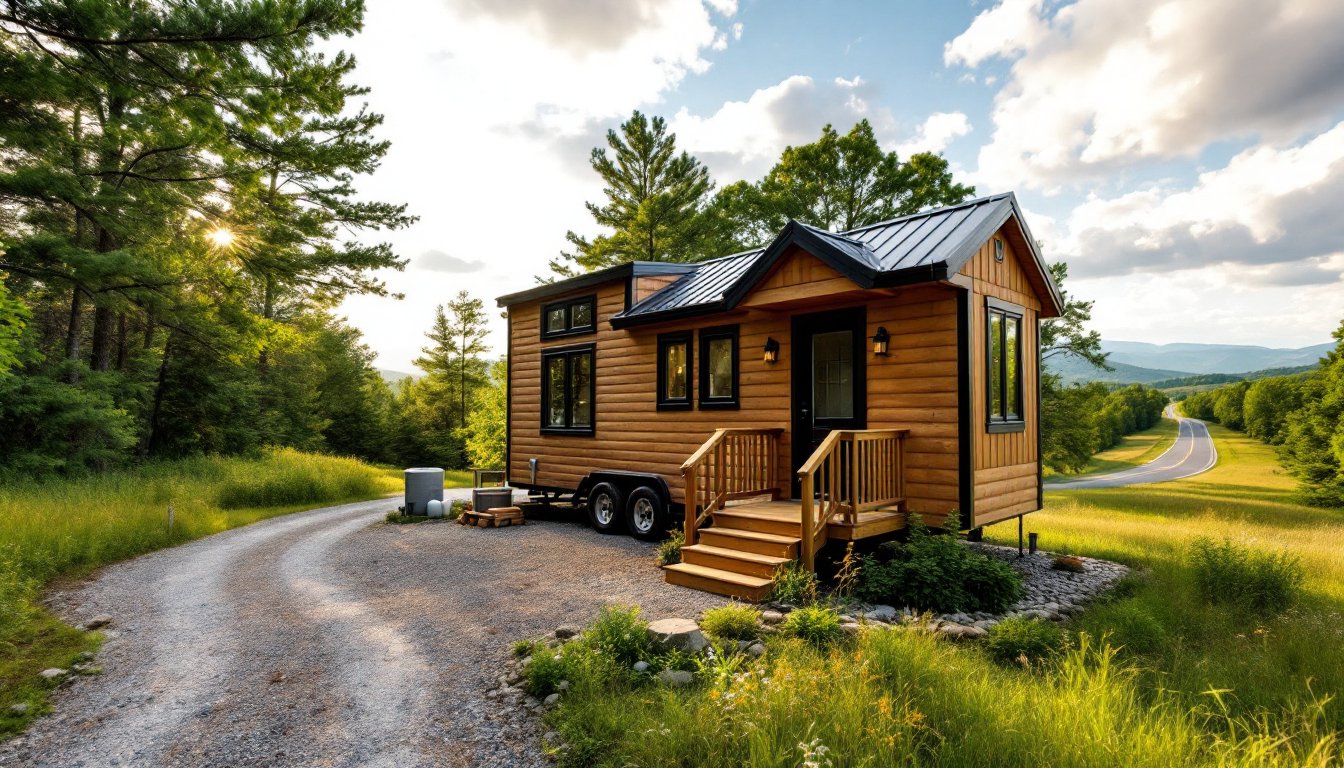

Georgia’s tiny home market has exploded over the past few years, and for good reason. The state offers a rare combination of affordable land, mild climate, and a growing network of tiny-friendly communities. Whether you’re eyeing a permanent residence on rural acreage, a rental investment near the Appalachian foothills, or a backyard ADU in Atlanta, the options have never been more varied. This guide walks through the types of tiny homes for sale in Georgia, where to find them, and the zoning rules you’ll need to navigate before signing on the dotted line. No lifestyle fluff, just the practical details that’ll help you decide if Georgia’s tiny living scene is the right fit.
Table of Contents
ToggleKey Takeaways
- Georgia’s tiny homes for sale are priced affordably due to reasonable land costs, no state real property sales tax, and regulatory flexibility allowing structures under 400 square feet in many counties.
- Before purchasing tiny homes for sale in Georgia, verify local zoning rules directly with your county planning department, as regulations vary significantly by location and may restrict structures under certain square footages.
- Tiny home options in Georgia include park-model RVs ($50,000–$80,000), tiny houses on wheels (THOWs), foundation-built models, and shipping-container conversions, each with different financing, portability, and code compliance requirements.
- Budget for hidden costs including utility installation ($3,000–$10,000 for electrical service alone), septic permits, specialty insurance ($600–$1,200 annually), and site preparation before finalizing your tiny home purchase.
- Established tiny home communities like Tiny Towne, Serenbe, and Mountain Tiny Community offer simplified permitting and shared amenities, though lot prices range from $25,000 to $150,000+ depending on location and services.
- Off-grid tiny homes in Georgia require careful planning for composting toilets, rainwater catchment systems, and closed-cell spray-foam insulation to manage the state’s humidity and prevent condensation issues.
Why Georgia Is a Top Destination for Tiny Home Living
Georgia ranks among the most accessible states for tiny home buyers, thanks to a mix of regulatory flexibility and geographic diversity. Several counties, especially in North Georgia and along the coast, have updated ordinances to allow structures under 400 square feet as accessory dwelling units (ADUs) or park-model RVs on private land. That’s a stark contrast to states with blanket square-footage minimums that shut out most tiny builds.
The climate is another draw. Winters rarely dip below freezing in the southern half of the state, reducing heating costs and the complexity of insulation upgrades. Summers are humid, but a well-designed mini-split HVAC system (typically 9,000–12,000 BTU for a 200-square-foot space) keeps energy use manageable without ductwork.
Land prices remain reasonable outside metro areas. Rural lots in counties like Rabun, Pickens, and Habersham often sell for under $30,000, and many sellers are open to owner financing. That makes it feasible to buy both the home and the land outright, avoiding the HOA restrictions and lease terms that complicate tiny living in other markets. Georgia also has no state-level sales tax on real property, so your transaction costs stay lower than in neighboring states with transfer taxes.
Types of Tiny Homes Available in Georgia
The term “tiny home” covers several distinct builds, and knowing the differences will narrow your search.
Park-model RVs (also called PMRVs) are built on a chassis and certified under ANSI A119.5 standards. They max out at 400 square feet and are towable, though most buyers place them permanently on a foundation or pad. Expect 8-foot-wide trailers if you want highway mobility without an oversize permit, or 10-foot models if you’re hauling short distances or placing on-site. These units often come with RV-grade appliances and hookups for 30- or 50-amp electrical service.
Tiny houses on wheels (THOWs) fall under the Appendix Q provisions of the IRC in some jurisdictions, but Georgia doesn’t uniformly enforce that code. Most are custom builds ranging from 120 to 320 square feet, framed with 2×4 studs on a flatbed trailer. Because they’re technically movable, they sometimes skirt minimum square-footage rules, but you’ll still need to verify local zoning for “temporary” or “recreational” structures.
Foundation-built tiny homes are stick-framed on a permanent slab or pier foundation. These meet standard IRC codes and qualify for conventional mortgages if they exceed the local minimum (often 600 square feet in incorporated areas). In practice, most foundation builds land between 400 and 800 square feet to stay cost-effective. They’re easier to finance and insure, but they lose the portability that draws many buyers to tiny living.
Shipping-container conversions have gained traction, especially near Savannah and Brunswick where surplus containers are plentiful. A single 20-foot container (160 square feet interior) runs $2,000–$4,000: a 40-foot high-cube offers 320 square feet and 9’6″ ceiling height. Structural modifications, cutting windows, adding doors, require a welder and engineer’s stamp in most counties. Budget for spray-foam insulation (closed-cell R-6 per inch minimum) to handle Georgia’s humidity and prevent condensation inside the steel walls.
Where to Find Tiny Homes for Sale in Georgia
Online Marketplaces and Specialty Builders
Tiny House Listings and Tiny Home Builders aggregate inventory from private sellers and certified builders. You’ll see everything from turnkey models to partially finished shells. Filter by RVIA certification if you want a park-model that qualifies for RV financing, or search for “IRC-compliant” if you need a structure that meets residential building codes.
Local builders dominate the Georgia market. Tiny House Atlanta and North Georgia Tiny Homes offer both stock plans and custom designs, with lead times of 12 to 16 weeks for standard builds. Expect to pay $50,000 to $80,000 for a fully finished 200-square-foot THOW with mid-grade finishes, LP SmartSide siding, quartz countertops, luxury vinyl plank (LVP) flooring. Custom features like a composting toilet, off-grid solar package (typically 2–4 kW), or upgraded appliances can push the price above $100,000.
Some buyers prefer DIY shell kits. Companies like Tumbleweed and Jamaica Cottage Shop ship pre-cut framing packages with pressure-treated floor joists and wall panels. You’ll still need to source windows, doors, insulation, and finishes locally, but the kit eliminates layout guesswork and speeds framing. Plan on 200 to 300 labor hours to finish the interior if you’re comfortable with basic carpentry and electrical work. Structural or gas plumbing should be handled by licensed trades in most Georgia counties.
Tiny Home Communities Across the State
Several purpose-built tiny home parks have opened since 2024, offering lots with shared amenities and simplified permitting. Tiny Towne near Helen features 30 rental and owner-occupied sites with fiber internet, communal pavilions, and septic hookups. Lot leases run $400 to $600 per month depending on size and proximity to trails.
Serenbe, a planned community south of Atlanta, allows ADUs and tiny homes as secondary dwellings on residential lots. It’s pricier, lot premiums start around $150,000, but you get access to walking trails, organic farms, and a built-in market for short-term rental income if you Airbnb the unit.
For a more affordable option, check Mountain Tiny Community in Ellijay. The development targets retirees and remote workers, with 240- to 400-square-foot lots for sale at $25,000 to $35,000. Water and electric are run to each pad, and the HOA allows most RVIA-certified park models without additional inspection. It’s a solid choice if you want tiny living without the hassle of navigating county zoning solo.
What to Know Before Buying a Tiny Home in Georgia
Zoning Laws and Placement Regulations
Georgia has no statewide tiny home legislation, so rules vary by county and municipality. Unincorporated areas tend to be more lenient: many counties allow park-model RVs as temporary structures if they’re registered and tagged annually. Permanent placement often requires a septic permit (if you’re not hooking to municipal sewer) and compliance with setback requirements, typically 10 feet from side property lines and 25 feet from the road.
In incorporated cities like Atlanta, Savannah, and Athens, tiny homes usually fall under ADU ordinances. Atlanta’s code permits ADUs as small as 300 square feet on lots zoned R-1 through R-5, provided the primary dwelling is owner-occupied. The ADU can’t exceed 50% of the main home’s footprint, and parking for one vehicle must be added. Savannah has similar rules but requires a special-use permit for structures under 500 square feet, which involves a public hearing and a $350 application fee.
Some counties still enforce minimum square-footage rules that effectively ban tiny homes. For example, Gwinnett County requires all single-family dwellings to be at least 1,200 square feet of heated space. Before you buy land or a home, call the county planning department and ask three questions:
- What’s the minimum square footage for a dwelling?
- Are ADUs or park-model RVs permitted on my zoning classification?
- Do I need a septic permit, and what’s the soil percolation requirement?
If you’re placing a THOW and want to avoid the “RV” label, some buyers anchor the unit on pier-and-beam foundations and remove the wheels. This can reclassify it as a permanent structure, but you’ll need an engineer’s letter confirming it meets wind-load standards (140 mph in coastal zones per IRC) and a building permit before you start.
Utilities are the next hurdle. Most tiny homes use 120/240V service at 100 or 200 amps, depending on whether you’re running electric heat or relying on propane. If the lot isn’t served by a utility pole, budget $3,000 to $10,000 for a trench and transformer installation. Water hookups are simpler if municipal lines are available, but drilling a well in rural Georgia costs $15 to $30 per foot, expect 150 to 300 feet in the Piedmont, deeper in the Coastal Plain.
For off-grid setups, a composting or incinerating toilet eliminates the need for septic (though some counties still require a graywater system for sinks and showers). Rainwater catchment is legal in Georgia, but potable systems need filtration and UV treatment to meet health codes if you’re using it for drinking water.
Insurance can be tricky. Standard homeowners policies often exclude structures under 600 square feet or anything on wheels. Look for specialty carriers like Strategic Insurance Agency or Tiny Home Insurance Services, which offer policies tailored to THOWs and park models. Premiums run $600 to $1,200 annually for $50,000 in coverage, higher if you’re in a flood zone.
Finally, resale value is less predictable than traditional homes. Tiny homes in established communities or on desirable land hold value better than standalone units in areas with restrictive zoning. If you’re financing, expect higher interest rates, 7% to 10%, and shorter terms than a conventional mortgage. Some builders offer in-house financing, but read the terms carefully: balloon payments and prepayment penalties are common.
Buying a tiny home in Georgia is absolutely doable, but it requires more due diligence than a standard real estate transaction. Verify zoning, secure utilities, and budget for the hidden costs, permits, site prep, and insurance, that don’t show up in the sticker price. Do that legwork upfront, and you’ll avoid the headaches that derail less-prepared buyers.