

Your refrigerator and freezer run nonstop, consuming more energy than nearly any other appliance in your home while preserving hundreds of dollars’ worth of food. Even though their importance, most homeowners don’t think about these units until they fail, usually at the worst possible moment. Understanding how these appliances work, what separates a good model from a mediocre one, and how to maintain them properly can save significant money and prevent food loss. This guide covers everything from choosing the right configuration for your kitchen to troubleshooting common issues before calling a technician.
Table of Contents
ToggleKey Takeaways
- Refrigerators maintain temperatures between 35°F–38°F while freezers operate at 0°F or below, and combination units require thicker insulation and dual evaporators for efficient temperature management.
- Choose your refrigerator and freezer configuration based on kitchen layout and lifestyle—top-freezer models offer the best energy efficiency, while French-door designs provide better ergonomics and storage for larger families.
- Clean condenser coils every six months, test door seals monthly, and keep airflow unobstructed to prevent the compressor from overworking and extending appliance lifespan.
- Top-freezer models use 400–500 kWh annually, while side-by-side and French-door units consume 600–800 kWh, making energy efficiency a key factor in long-term cost savings.
- Most common refrigerator and freezer problems—improper cooling, frost buildup, and water leaks—can be diagnosed and fixed with DIY maintenance before calling a technician.
Understanding the Key Differences Between Freezers and Refrigerators
The fundamental difference comes down to operating temperature and compressor cycling. Refrigerators maintain temperatures between 35°F and 38°F, keeping food fresh without freezing. Freezers hold at 0°F or below, which stops bacterial growth entirely and preserves food for months.
Both use the same refrigeration cycle, compressor, condenser coils, evaporator coils, and refrigerant, but freezers run longer cycles and use thicker insulation (typically 2-3 inches of polyurethane foam versus 1-2 inches in refrigerator compartments). This is why chest freezers feel noticeably heavier than refrigerators of similar exterior dimensions.
The compressor in a combination unit (fridge-freezer) works harder than in standalone appliances because it’s managing two different temperature zones simultaneously. Many modern units use dual evaporators, one for each compartment, which prevents odor transfer and allows independent temperature control. Older or budget models use a single evaporator with a damper system, which is less efficient and can lead to freezer burn or warm spots in the refrigerator section.
Moisture management also differs. Refrigerators need some humidity to keep produce crisp, while freezers must stay dry to prevent ice buildup. Auto-defrost systems in freezers periodically warm the evaporator coils just enough to melt frost, then drain the water to a pan beneath the unit.
Types of Refrigerators and Freezers for Modern Homes
Choosing the right style depends on your kitchen layout, how you shop, and what you store.
Top-freezer refrigerators remain the most affordable and energy-efficient option, typically using 450-500 kWh annually. The freezer sits above the fresh-food compartment, which puts everyday items at waist level or below, not ideal for anyone with mobility issues, but perfectly functional for most households.
Bottom-freezer models flip that arrangement, placing fresh food at eye level. They cost slightly more and use marginally more energy because the compressor works harder to pump refrigerant upward, but they’re more ergonomic for daily use.
Side-by-side units split the appliance vertically. They fit narrow spaces better than French-door models and offer more shelving options, but the narrow compartments make it tough to store wide items like sheet pans or pizza boxes.
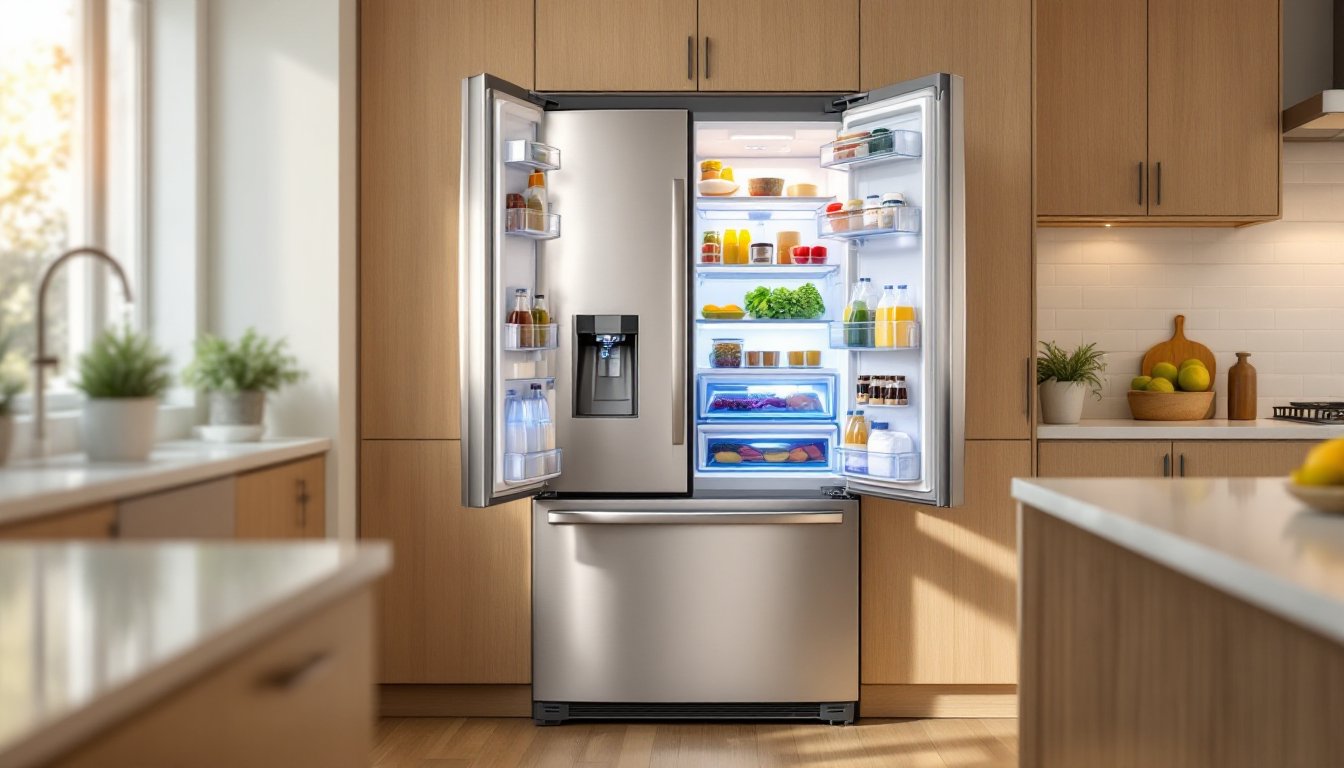
French-door refrigerators pair double doors on top with a bottom freezer drawer. They’re popular because the full-width refrigerator shelves accommodate large platters, and the drawer design organizes frozen goods better than a conventional freezer. Expect to pay a premium, and watch the door seals carefully, since dual doors create twice the potential for air leaks.
Counter-depth models sit flush with standard cabinets (typically 24-25 inches deep versus the standard 30-36 inches), creating a built-in look without custom cabinetry. You sacrifice 2-4 cubic feet of capacity, which matters for larger families.
Stand-Alone Freezers vs. Combination Units
Chest freezers offer the best energy efficiency and largest usable capacity for the footprint. Cold air sinks, so opening the lid doesn’t dump cold air the way opening an upright door does. They’re ideal for bulk storage, half a beef, seasonal produce, meal prep, but require bending and digging to access items at the bottom. Baskets help, but only so much. Plan on 5-7 cubic feet per household member if this is your primary frozen storage.
Upright freezers organize more like a refrigerator, with shelves and door bins. They fit in tighter spaces (a 20-cubic-foot upright has roughly the same footprint as a 25-cubic-foot chest), but they lose more cold air during access and cost more to run. They’re better for households that freeze smaller quantities and need quick access.
Combination units make sense for most homes where space is limited. If you hunt, garden extensively, or buy in bulk, adding a standalone freezer in the garage or basement pays for itself in food savings. Just ensure the space stays above 50°F year-round: many freezers struggle in unheated garages during winter because the thermostat doesn’t trigger the compressor when ambient temperature drops too low.
How to Choose the Right Size and Configuration for Your Space
Start with measurements, not shopping. Measure the space height, width, and depth, then subtract 1 inch from width and depth for ventilation clearance, and verify ceiling height allows the doors to open fully. Top-freezer units need clearance above: French doors need side clearance.
For capacity, figure 4-6 cubic feet per household member as a baseline for a combination refrigerator-freezer. A family of four typically needs 16-24 cubic feet total. If you meal prep, entertain regularly, or shop less than once a week, size up.
Door swing matters more than most people realize. A right-hinged door opening into a kitchen island creates a traffic jam. Most refrigerators allow hinge reversal, but confirm before buying, and check whether the handle relocates or stays put (on some models, a reversed door puts the handle on the hinge side, which looks odd).
Counter-depth units often work better in galley kitchens or open-plan spaces where a standard-depth fridge protrudes awkwardly. But, many kitchen design experts point out that losing interior capacity can force households into a second fridge, which negates the streamlined aesthetic.
Electrical requirements are usually straightforward: a dedicated 15-amp or 20-amp circuit with a grounded three-prong outlet. Larger units or those with ice makers and through-the-door dispensers may specify a 20-amp circuit. Ice makers also require a 1/4-inch water line, typically tapped from the cold supply under the sink. If your kitchen lacks this, budget $150-$300 for a plumber to run one (DIY is possible if you’re comfortable working with copper or PEX and have shutoff access).
Essential Maintenance Tips to Extend Appliance Lifespan
Most refrigerator and freezer failures trace back to poor maintenance, specifically, dirty coils and blocked airflow.
Condenser coils sit either on the back panel or beneath the unit behind a grille. They dissipate heat, and when they’re caked in dust, pet hair, or grease, the compressor runs longer and hotter. Clean them every six months using a coil brush (a narrow brush with stiff bristles, available at any hardware store) and a vacuum with a brush attachment. Unplug the unit first. For bottom-mounted coils, remove the kick plate and brush horizontally: for rear coils, pull the fridge away from the wall.
Door seals (gaskets) degrade over time, allowing warm air infiltration that makes the compressor cycle constantly. Test them by closing the door on a dollar bill, if you can pull it out without resistance, the seal is weak. Clean gaskets monthly with warm soapy water (avoid harsh chemicals, which dry out the rubber). If they’re cracked or torn, replacement gaskets cost $50-$150 and snap or screw into place without special tools.
Defrost drains in auto-defrost units can clog with food particles or ice, causing water to pool inside the fridge or leak onto the floor. The drain is usually at the back of the refrigerator compartment, often hidden behind a panel. Flush it with warm water and a few drops of dish soap using a turkey baster or a length of 1/4-inch vinyl tubing. Some techs recommend pouring a tablespoon of bleach down the drain quarterly to prevent algae growth in the drip pan.
Keep the interior organized to allow airflow. Blocking vents, usually along the back wall or ceiling of each compartment, forces the unit to work harder. Don’t overload shelves or pack items tightly against the back wall.
If your freezer isn’t frost-free, manual defrost annually or whenever frost exceeds 1/4 inch. Unplug the unit, remove contents to coolers, and let it thaw naturally (don’t chip ice with tools, you’ll puncture the liner). Wipe down the interior, clean the drain, then restart and allow it to reach temperature before reloading.
Energy Efficiency and Cost-Saving Strategies
Refrigerators account for roughly 7-8% of household energy use, so efficiency matters. The ENERGY STAR label indicates a model meets EPA standards, typically 10-15% more efficient than the federal minimum. But, the label alone doesn’t tell the full story: check the yellow EnergyGuide tag for estimated annual kWh usage.
Top-freezer models generally consume the least energy (400-500 kWh/year), followed by bottom-freezer (500-600 kWh/year) and side-by-side or French-door units (600-800 kWh/year). Through-the-door ice and water dispensers add 50-100 kWh annually because they require a heater to prevent the mechanism from freezing.
Keep the refrigerator section at 37°F and the freezer at 0°F. Every degree colder wastes energy. Use an inexpensive appliance thermometer to verify, built-in dials often drift out of calibration.
Location affects efficiency. Placing a refrigerator next to an oven, dishwasher, or in direct sunlight forces the compressor to work harder. Leave at least 1 inch of clearance on sides and top for airflow. In unfinished basements or garages, insulate the walls and ensure ambient temperature stays between 55°F and 100°F: extreme cold or heat reduces efficiency and can damage the compressor.
Full freezers run more efficiently than empty ones because frozen mass holds temperature better than air. If you don’t keep a freezer well-stocked, fill empty space with jugs of water (leave 2 inches of headspace for expansion). Refrigerators, conversely, need airflow, so don’t pack them too tightly.
Older units (pre-2000) often use 1,000-1,500 kWh/year. Replacing a 20-year-old fridge with a modern ENERGY STAR model can save $100-$200 annually on electricity, meaning the appliance pays for itself in 5-7 years. Many utilities offer rebates on efficient models: check your provider’s website before purchasing.
Common Problems and DIY Troubleshooting Solutions
Unit not cooling: First, check that it’s plugged in and the outlet has power (test with a lamp). If power is good, listen for the compressor, a low hum or occasional clicking. No sound often means a failed compressor or relay, which requires a technician. If the compressor runs constantly but the unit stays warm, suspect dirty coils, a failing thermostat, or a refrigerant leak. Clean the coils first: if that doesn’t help, call a pro.
Freezer too cold, refrigerator too warm (or vice versa): In single-evaporator models, this usually indicates a stuck damper between compartments. Locate the damper (check your manual), and confirm it opens and closes freely. Ice buildup around it suggests a defrost issue. In dual-evaporator units, one evaporator may have failed, beyond DIY scope.
Excessive frost or ice buildup in a frost-free freezer: The defrost heater, timer, or thermostat has likely failed. You can test the defrost timer manually by advancing it with a screwdriver (consult the manual for location and procedure). If the heater doesn’t warm the coils, the timer or heater itself needs replacement. Both are moderately DIY-friendly if you’re comfortable with basic wiring and have a multimeter.
Water pooling inside or beneath the unit: Check the defrost drain first (see maintenance section). If it’s clear and water still appears, the drip pan may be cracked or misaligned. Pull the unit out and inspect the pan under the compressor area. Pans are inexpensive and easy to replace. For water inside the fridge, also inspect the water line to the ice maker for leaks or loose fittings.
Noisy operation: Some noise is normal, compressor hum, refrigerant gurgling, occasional clicks from the defrost timer. Loud rattling often means the drip pan is loose or the condenser fan is hitting debris. Squealing or grinding suggests a failing evaporator or condenser fan motor. Fans are DIY-replaceable with basic tools, but if you’re unsure, snap a video of the noise and consult appliance troubleshooting guides or a technician.
Ice maker not working: Confirm the water supply is on and the line isn’t kinked or frozen. Many units have a shutoff arm or switch for the ice maker, make sure it’s in the ON position. If water reaches the unit but ice doesn’t form, the inlet valve or the ice maker module itself may have failed. Modules are swappable with a screwdriver and cost $50-$120, depending on the model.
Always wear safety glasses when working near compressor areas or using cleaning tools around coils. Disconnect power before accessing internal components. If you smell burning plastic, see sparks, or hear loud popping, unplug immediately and call a technician, these suggest electrical faults that can start fires.