
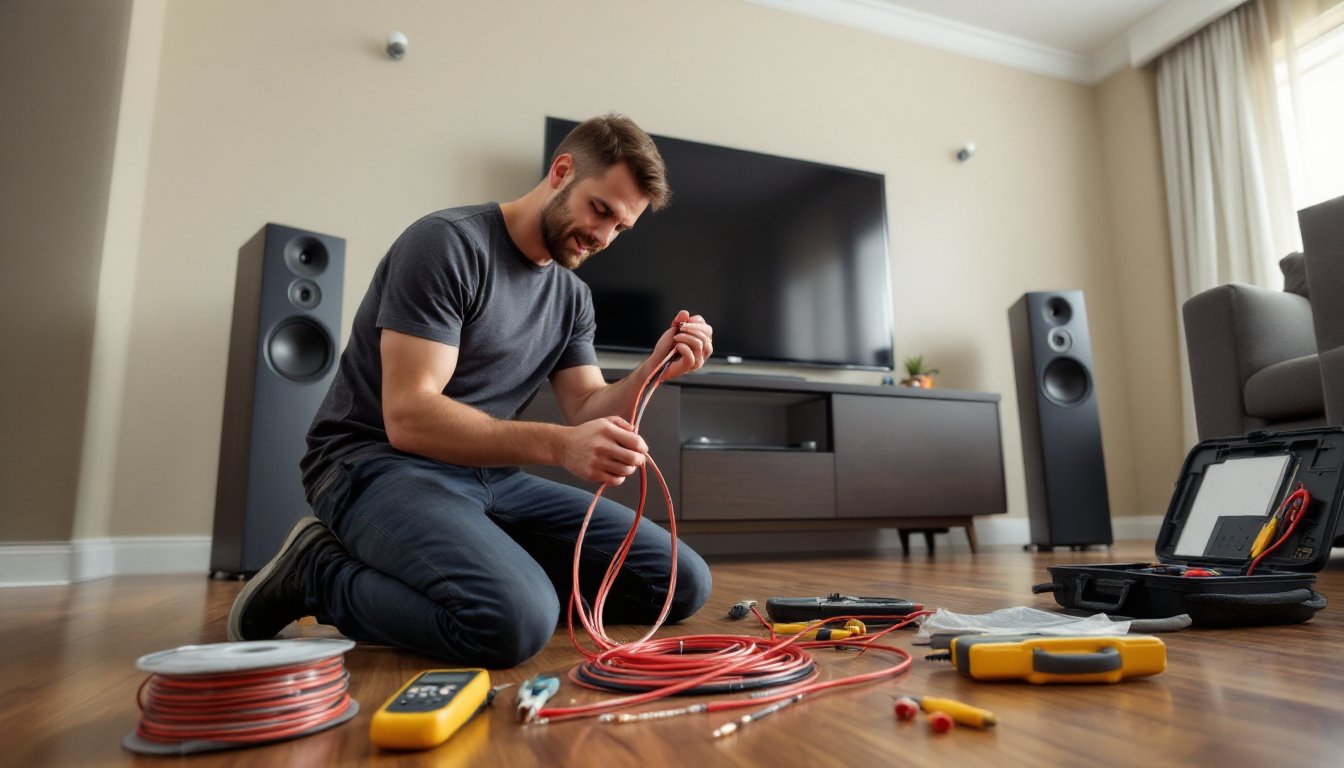

If you’re dropping cash on a home theater system, the speaker wire you choose can make or break the experience. It’s not about audiophile snake oil, proper gauge, material quality, and installation technique directly affect signal loss, clarity, and overall sound performance. Too thin, too long, or too cheap, and you’ll hear the difference in muddied bass and weak highs. This guide cuts through the marketing hype to help you pick wire that actually delivers the sound your speakers are capable of producing.
Table of Contents
ToggleKey Takeaways
- The best speaker wire for home theater must match gauge to your longest cable run—use 16 AWG for runs under 50 feet, 14 AWG for 50–80 feet, and 12 AWG for runs exceeding 80 feet or 4-ohm speakers.
- Oxygen-free copper (OFC) wire is superior to copper-clad aluminum (CCA) for permanent installations due to better conductivity, corrosion resistance, and longevity, making it the best choice for serious home theater investments.
- Proper installation practices including polarity verification, correct wire stripping, and at least 6–12 inches of clearance from electrical wiring prevent signal loss and ensure optimal sound performance.
- Fire-rated CL2 or CL3 speaker wire is essential for in-wall runs to meet building codes and safety standards in residential installations.
- Using consistent gauge across all speaker pairs prevents impedance mismatches that can degrade stereo imaging and overall soundstage quality.
Why Speaker Wire Quality Matters for Your Home Theater
Speaker wire carries an analog electrical signal from your amplifier or receiver to your speakers. Unlike digital HDMI cables, where the signal either works or doesn’t, speaker wire quality directly impacts audio performance through resistance.
Resistance is the enemy. As the signal travels through the wire, resistance causes power loss and frequency roll-off, especially in higher frequencies. Use wire that’s too thin or too long, and you’ll notice reduced volume, less bass punch, and dulled treble. The difference isn’t subtle when you’re pushing a 7.1 or Atmos setup with rear and height channels.
Cheap wire often uses inferior metals, thin conductors, or poor insulation that degrades over time. Oxidation, corrosion, and jacket cracking lead to intermittent connections and long-term signal degradation. Quality wire uses pure copper strands, durable PVC or polyethylene jackets, and proper color coding to prevent phase errors during installation.
Safety also matters. Under-spec wire can overheat if your amplifier pushes serious wattage, particularly with low-impedance speakers (4-ohm loads). While residential systems rarely approach dangerous current levels, in-wall runs must use CL2 or CL3 rated wire to meet fire code in most jurisdictions. If you’re running wire through walls, check local building codes before you start fishing lines.
Understanding Speaker Wire Gauge and Length Requirements
Speaker wire gauge follows the AWG (American Wire Gauge) standard, smaller numbers mean thicker wire with lower resistance. For home theater, you’ll typically choose between 16 AWG, 14 AWG, or 12 AWG.
Here’s the rule: match gauge to the longest run in your system. For runs under 50 feet with 8-ohm speakers, 16 AWG works fine for most setups. It’s affordable, flexible, and easy to route behind baseboards or through wall cavities. If you’re running cable to rear surrounds across a large room (50–80 feet), step up to 14 AWG to keep resistance in check. For runs over 80 feet, dedicated theater rooms with multiple subwoofers, or 4-ohm speakers, use 12 AWG, it’s stiffer and harder to work with, but necessary to prevent signal loss.
Many modern home theater systems integrate wireless rear speakers to avoid long cable runs, but wired connections still deliver the most reliable performance without latency or interference issues.
Don’t mix gauges within the same channel pair. If your front left speaker gets 14 AWG and the front right gets 16 AWG, you’ll create an impedance mismatch that can throw off stereo imaging. Buy enough of the appropriate gauge to complete the entire installation, plus 10–15% extra for routing slack and mistakes.
Nominal vs. actual: Just like lumber, AWG sizing can vary slightly by manufacturer. Quality wire will list the strand count and material, look for labels like “16 AWG, 2-conductor, 41-strand copper” to confirm you’re getting true-gauge wire, not under-spec knockoffs.
Top Speaker Wire Materials: Copper vs. CCA
Two materials dominate the market: OFC (oxygen-free copper) and CCA (copper-clad aluminum). The difference is significant.
OFC wire uses 99.9% pure copper strands. Copper has excellent conductivity, resists corrosion, and maintains signal integrity over decades. It’s heavier, more expensive, and the standard for any serious installation. If you’re investing in quality speakers and a receiver, don’t cheap out here, OFC pays dividends in longevity and performance.
CCA wire uses aluminum strands coated with a thin copper layer. It’s lighter and costs 30–50% less than pure copper, but aluminum has roughly 60% the conductivity of copper. To match OFC performance, you’d need to step up a full gauge size (use 14 AWG CCA where 16 AWG OFC would suffice). CCA also oxidizes faster and breaks more easily during installation, the strands snap if you bend them sharply or strip insulation carelessly.
CCA wire is adequate for temporary setups, budget installations in small rooms, or short runs under 25 feet. For anything in-wall, long-distance, or permanent, stick with OFC. The savings aren’t worth the hassle of redoing the install in five years when connections start failing.
Some manufacturers tout silver-plated copper or exotic alloys. Silver does have marginally better conductivity, but the difference is inaudible in residential applications. Save your money unless you’re outfitting a commercial cinema. What matters more is strand count, stranded wire (multiple thin strands) is more flexible and easier to route than solid-core, though solid-core can provide slightly lower resistance in very short runs.
Best Speaker Wires for Different Home Theater Setups
Budget-Friendly Options for Smaller Rooms
For a basic 5.1 setup in a room under 15×20 feet, you don’t need to overspend. 16 AWG OFC wire in 100-foot spools runs $20–35 and handles most residential needs. Look for UL-listed wire with clear polarity markings (stripe or ribbed insulation on one conductor) to maintain correct phase.
AmazonBasics and Mediabridge both make serviceable 16 AWG OFC wire with decent jackets and proper strand counts. If you’re on a tight budget and runs are under 30 feet, even quality CCA wire from Pyle or InstallGear will get the job done, just verify it’s true 16 AWG, not under-spec.
For in-wall runs, upgrade to CL2-rated 16 AWG OFC. GearIT and Sewell Direct offer affordable in-wall-rated options that meet NEC standards. CL2 or CL3 rating means the jacket is fire-resistant and safe to run inside walls without conduit, most inspectors will flag non-rated wire during rough-in.
Premium Choices for Dedicated Home Theaters
Dedicated rooms with 7.1.4 Atmos setups, high-wattage amplifiers, or runs over 50 feet warrant heavier investment. 14 AWG or 12 AWG OFC wire ensures you’re not leaving performance on the table. Monoprice’s CL3-rated 14 AWG 4-conductor cable is a solid mid-tier choice for around $50–70 per 100 feet, CL3 rating means it meets stricter fire standards than CL2.
For premium builds, companies like Blue Jeans Cable and Canare offer high-strand-count OFC wire with superior jackets and tight quality control. Blue Jeans’ Belden-based cable uses 10 AWG for subwoofer runs and offers custom terminations with locking banana plugs or spades. Expect to pay $1.50–3.00 per foot, but the build quality and customer support justify the cost if you’re wiring a $10k+ system.
Many enthusiasts running advanced home audio systems also invest in quality connectors, poorly crimped or oxidized terminals cause more signal loss than the wire itself. Solder connections or use compression banana plugs for the cleanest termination.
If aesthetics matter (exposed runs along baseboards or visible wall mounts), consider flat speaker wire or paintable in-wall wire. Flat wire slips under carpet or molding more easily than round cable, though it’s slightly more prone to damage from foot traffic.
Installation Tips for Optimal Performance
Proper installation extracts every bit of performance from your wire. Start by measuring each run with a tape measure, adding 10% extra for routing around obstacles and strain relief at the terminals. Never pull wire taut, leave slight slack to prevent stress on connections.
Strip wire cleanly. Use wire strippers calibrated to your gauge, not a utility knife. Nicks in the strands increase resistance and create failure points. Strip 3/8–1/2 inch of insulation, twist the strands tight, and tin with solder if your receiver’s binding posts are loose or oxidized.
Polarity matters. Keep the marked conductor (stripe, ridge, or print) connected to the positive terminal on both the amp and speaker. Reversing polarity on one speaker causes phase cancellation, bass disappears and the soundstage collapses. Use a battery test if markings fade: touch a 9V battery to the bare wires and watch the speaker cone. If it moves outward, you’ve identified positive.
Avoid parallel runs with AC power cables. Keep speaker wire at least 6–12 inches away from electrical wiring to prevent interference. If you must cross power lines, do so at 90-degree angles to minimize induction. In-wall runs should follow stud bays and use grommets where they pass through plates to protect the jacket from sharp edges.
When fishing wire through walls, attach it to a fish tape or string pulled from the attic or basement. Secure runs with cable staples or J-hooks rated for low-voltage wiring, never use metal staples that can pierce the jacket. For ceiling-mounted Atmos speakers, use plenum-rated CL3P wire if your local code requires it (common in commercial buildings, rare in residential unless specified).
Label everything. Tag each run at both ends with painter’s tape or cable labels before pushing wire into the wall. “Left Surround,” “Front Right,” “Height L” saves hours of troubleshooting later. Double-check connections with a multimeter set to continuity mode before closing up walls.
Finally, dress cables neatly. Bundle runs together with velcro straps (never zip ties, they can crush the jacket over time). Route behind furniture, under trim, or through cable raceways to keep the install looking professional. Exposed wire tangles look sloppy and create trip hazards.
If your project involves structural penetrations (drilling through fire-rated walls or floors), check whether your jurisdiction requires a permit. Most residential in-wall speaker wire doesn’t, but commercial or multi-family buildings often do. When in doubt, call your local building department before you start cutting holes.