
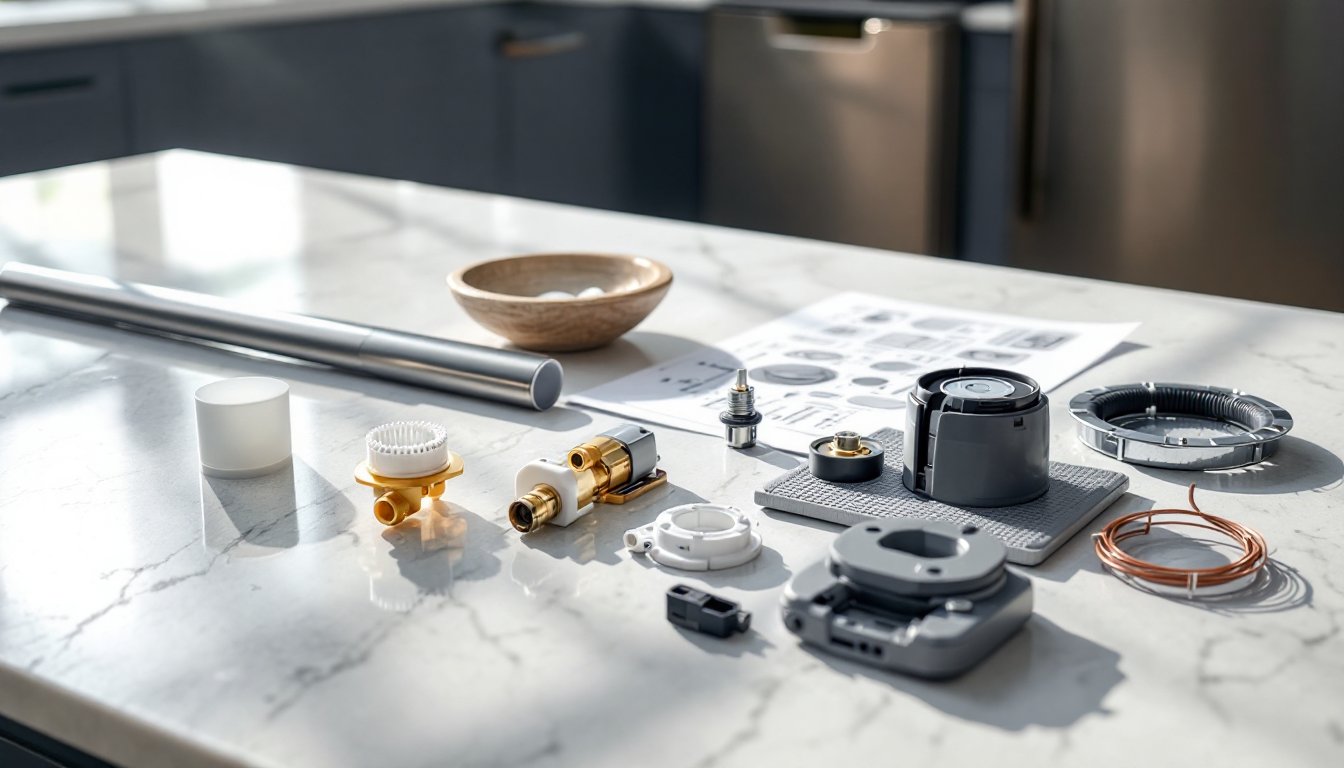

When an Electrolux dishwasher starts leaving dishes dirty or leaking onto the floor, the instinct is to panic and call for a costly service appointment. But many dishwasher failures come down to a single worn component, a gasket losing its seal, a spray arm clogged with mineral buildup, or a latch that’s finally given up after thousands of cycles. Understanding which parts fail most often, where to source genuine replacements, and when to tackle the fix yourself can save hundreds of dollars and extend the life of an appliance that still has years left in it.
Table of Contents
ToggleKey Takeaways
- Common Electrolux dishwasher parts that fail include spray arms clogged with mineral buildup, door gaskets losing their seal, and door latches worn from repeated use, often costing less than $50 to replace yourself.
- Always identify your dishwasher model number from the door edge before ordering replacement parts, as Electrolux components vary by model year and aren’t always interchangeable across different models.
- Purchase genuine OEM Electrolux dishwasher parts from the official Electrolux parts store or trusted distributors like AppliancePartsPros and PartSelect rather than generic alternatives, which may fail and cause costly water damage.
- Simple DIY repairs like spray arm, gasket, and filter replacement require basic tools and no electrical work, but control boards, pumps, and inlet valves should be handled by professionals to avoid safety risks.
- If your Electrolux dishwasher is over 10 years old and requires a major repair costing $200 or more, replacement may be more economical than repair given modern units use significantly less water and energy.
Understanding Your Electrolux Dishwasher Components
Electrolux dishwashers, whether built-in, drawer-style, or portable models, share a common architecture. Knowing how these systems work together helps pinpoint failures faster.
The wash system consists of upper and lower spray arms, a circulation pump, and a filter assembly. Water enters through an inlet valve, gets heated by an electric heating element or heat exchanger, then circulates under pressure through the spray arms. The filter traps food particles before water recirculates.
The door assembly includes the outer panel, inner liner, door latch mechanism, door gasket (seal), and control panel. The latch engages a switch that allows the cycle to start: if it’s misaligned or broken, the dishwasher won’t run.
The drainage system uses a drain pump to expel used water through a hose that connects to the sink drain or garbage disposal. A check valve or air gap prevents backflow.
Electrical and control components include the main control board (often mounted behind the door panel), user interface, door switch, float switch (to prevent overfilling), and thermal fuses. These parts communicate via low-voltage wiring harnesses.
Racks, tines, and rollers are structural but wear out. Broken tines can’t hold dishes securely: damaged rollers make racks hard to slide.
Understanding this layout makes diagnostics straightforward. A unit that won’t fill points to the inlet valve or float switch. One that won’t drain suggests a clogged pump or kinked hose. No heat? Check the element and thermal fuse.
Most Commonly Replaced Electrolux Dishwasher Parts
Certain components fail predictably due to wear, water chemistry, or mechanical stress. Stocking up on or knowing where to find these parts speeds up repairs.
Spray Arms and Nozzles
Spray arms distribute water across dishes. Over time, hard water deposits clog the nozzles, reducing spray pressure and leaving dishes dirty. Plastic arms can also crack from impacts or age.
Inspect spray arms by removing them (most twist off or release via a central nut). Hold them up to a light and check each nozzle opening. If buildup is minor, soak the arm in white vinegar for 30 minutes and clear nozzles with a toothpick or small wire. If the arm is cracked, warped, or has missing nozzles, replace it.
Genuine Electrolux spray arms are model-specific. Upper arms on some models have a different diameter and mount style than lower arms. Always cross-reference the part number with the dishwasher’s model and serial number (found on the door edge or interior frame).
Replacement is simple: snap or thread the new arm into place, spin it by hand to confirm it rotates freely without hitting racks or the tub wall. No tools required beyond possibly a flathead screwdriver to remove a retaining nut.
Door Latches and Gaskets
The door latch is a mechanical and electrical component. It physically holds the door closed and activates a microswitch that signals the control board to start the cycle. Latches fail when plastic strikers wear down or the spring mechanism weakens. Symptoms include a door that won’t stay shut, a cycle that won’t start, or a blinking error code.
Replacing a latch typically requires removing the inner door panel. Safety first: disconnect power at the breaker before opening any panel. The latch is usually held by two or three screws and a wire harness connector. Match the old part exactly: latch assemblies vary by model year and door style.
The door gasket (or door seal) runs along the bottom and sometimes the sides of the door opening. It prevents water from leaking onto the floor during wash cycles. Gaskets degrade from heat, detergent chemicals, and repeated compression. A failing gasket shows cracks, tears, or has lost its flexibility.
To replace, peel off the old gasket (some are held by adhesive or a retaining strip). Clean the channel thoroughly, detergent residue and mold reduce the seal’s effectiveness. Press the new gasket into the groove, starting at one corner and working around. Some gaskets have alignment tabs: make sure they seat properly. Run an empty cycle and check for leaks.
Many home repair guides cover latch and gasket replacement in detail, but Electrolux-specific models may have unique clip designs.
Where to Buy Genuine Electrolux Replacement Parts
Sourcing the correct part matters. Aftermarket or universal parts may fit physically but fail to meet OEM tolerances, leading to leaks, noise, or repeat failures.
Electrolux’s official parts store (accessible via their website) stocks genuine components. Search by model number to see compatible parts. Pricing is transparent, and parts ship with installation instructions. Lead times vary: common parts like gaskets and spray arms typically ship within a few days, while control boards or pumps may take a week or more.
Appliance parts distributors like AppliancePartsPros, PartSelect, and RepairClinic carry OEM Electrolux parts and often have helpful diagrams showing where each component sits. These sites let users search by symptom (“dishwasher won’t drain”) and model number, then suggest likely parts. They also sell repair kits that bundle related components (e.g., a latch assembly with screws and a new gasket).
Local appliance repair shops sometimes sell parts over the counter. Call ahead with the model number and part number (if known). Prices may be higher than online, but immediate availability can be worth it if a broken dishwasher is holding up meal cleanup.
Big-box home improvement stores (Lowe’s, Home Depot) stock a limited selection of universal dishwasher parts, generic racks, hoses, and detergent dispensers. They rarely carry model-specific Electrolux components, so they’re best for accessories or consumables, not critical repairs.
Avoid generic parts for anything that affects safety or water containment. A $12 aftermarket inlet valve might save money upfront but could flood a kitchen if it fails. Genuine parts come with warranties and are designed for the exact pressure, voltage, and thermal conditions of the appliance.
How to Identify the Right Part for Your Model
Ordering the wrong part wastes time and return shipping fees. Electrolux dishwashers span multiple brands (Electrolux, Frigidaire, and some Kenmore models), and parts aren’t always interchangeable.
Start with the model and serial number. Open the dishwasher door and look along the top edge of the door opening or on the side of the tub. The model number is usually a string like EIDW6305KS or FGID2476SF. Write down the full string, including letters and numbers. The serial number helps identify the manufacturing date, which matters if the model had mid-cycle design changes.
With the model number, visit the Electrolux parts website or a distributor’s parts lookup tool. Enter the model number to pull up an exploded diagram of the dishwasher. These diagrams show every screw, bracket, and component with a reference number. Click on the part that matches the broken piece to see the manufacturer’s part number, price, and availability.
If unsure which part is causing the problem, use the symptom-based search. Enter “won’t drain” or “leaking” along with the model number. The tool will suggest likely culprits. Cross-reference the part numbers with photos or descriptions.
For older or discontinued models, part availability may be limited. Check if a superseded part number is listed, manufacturers sometimes replace an old part number with a newer, compatible design. If no OEM part is available, contact Electrolux customer service or a certified repair center: they may have access to remaining stock or recommend a compatible alternative.
Take a photo of the broken part before removing it fully. Note how wires connect, which direction gaskets face, and where clips or screws go. These details prevent reassembly errors.
DIY Replacement vs. Professional Repair: Making the Right Choice
Not every repair is a DIY project. Some require specialized tools, diagnostics, or warranty considerations.
DIY-friendly repairs include spray arms, filters, gaskets, racks, and hoses. These parts are accessible without disassembling major components, and installation doesn’t involve electrical work beyond unplugging the unit. If the dishwasher is out of warranty and the part costs less than $50, DIY makes sense. Wear safety glasses when working inside the tub (sharp edges and broken plastic are common), and keep a towel handy, residual water in hoses and pumps will spill.
Tools needed: Screwdrivers (Phillips and flathead), pliers, a flashlight, and possibly a socket set for door panel screws. A wet/dry vacuum helps clear standing water before working on drain components.
Moderate-skill repairs include door latches, inlet valves, and heating elements. These require removing panels and handling wire connectors. Always disconnect power at the breaker before touching any electrical component. If uncomfortable working with low-voltage wiring or unsure how to test continuity with a multimeter, call a pro.
Drain pumps and circulation pumps are accessible but involve removing the lower spray arm, filter, and sometimes the sump cover. Pumps are held by screws or clips and have hose clamps and wire harnesses. Expect to get wet and deal with trapped food debris. Replacement pumps run $80–150.
Professional-only repairs include main control boards, touchpad assemblies, and anything requiring soldering or firmware updates. Control boards can cost $150–300, and misdiagnosing the issue wastes money. If multiple components are failing (e.g., won’t fill and won’t heat and displays error codes), the problem may be upstream in the wiring or power supply. A technician with a service manual and diagnostic mode access can pinpoint the root cause.
Warranty coverage matters. If the dishwasher is under manufacturer’s warranty or an extended service plan, DIY repairs may void coverage. Check the warranty terms before ordering parts. Some plans require using authorized service providers.
Age and overall condition also factor in. If the unit is 10+ years old, has required multiple repairs, and needs a $200 control board, replacement may be smarter than repair. Modern dishwashers are more water- and energy-efficient: models meeting the latest EPA water standards and using less than 3.5 gallons per cycle pay for themselves in utility savings over time.
If unsure, request a diagnostic visit from a certified Electrolux service tech. The service call fee (typically $75–150) includes troubleshooting and a repair quote. If the repair is straightforward and parts are in stock, it can be done same-day. If not, at least there’s a clear diagnosis to decide whether to fix or replace.
For cosmetic or minor issues, like replacing a detergent that improves cleaning performance or fixing a squeaky rack, DIY is almost always the right call. For anything involving water supply lines under pressure (inlet valves, fill hoses), double-check connections and run a test cycle while monitoring for leaks. A small drip can cause major water damage over time.